Stevens Senior Builds AI Platform to Help Research Labs Capture and Reuse Their Own Knowledge
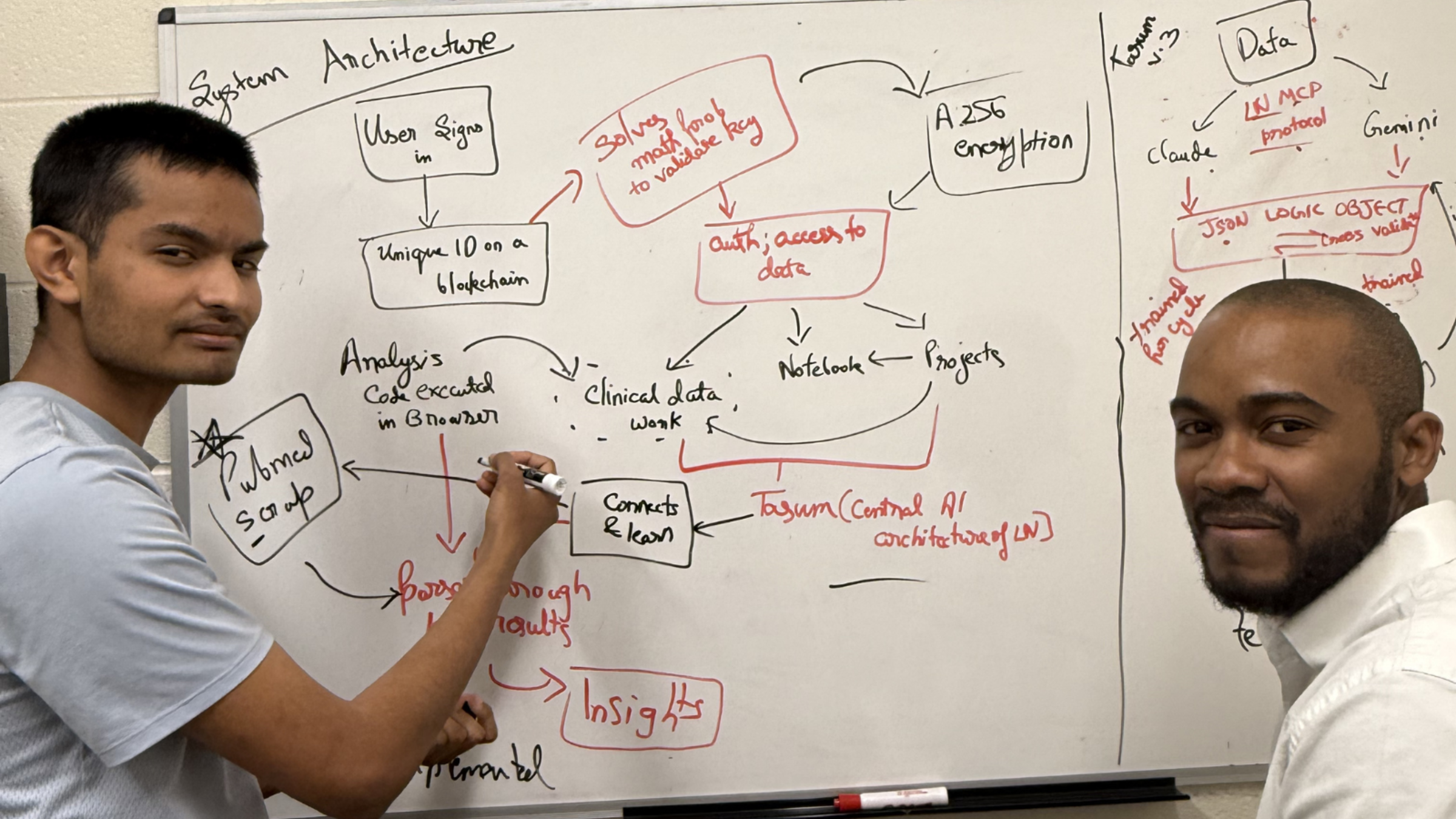
Stevens senior Rimmo Loyi Lego '26 from the Department of Biomedical Engineering has witnessed research knowledge vanish.
In research labs, some types of knowledge — a published finding or a clean dataset — make it to the official record. Informal knowledge, like handwritten notes on inconclusive test runs or undocumented observations from failed experiments, can often be elusive. In the hands of a researcher, that information can be just as valuable, helping them replicate work without wasting time or materials.
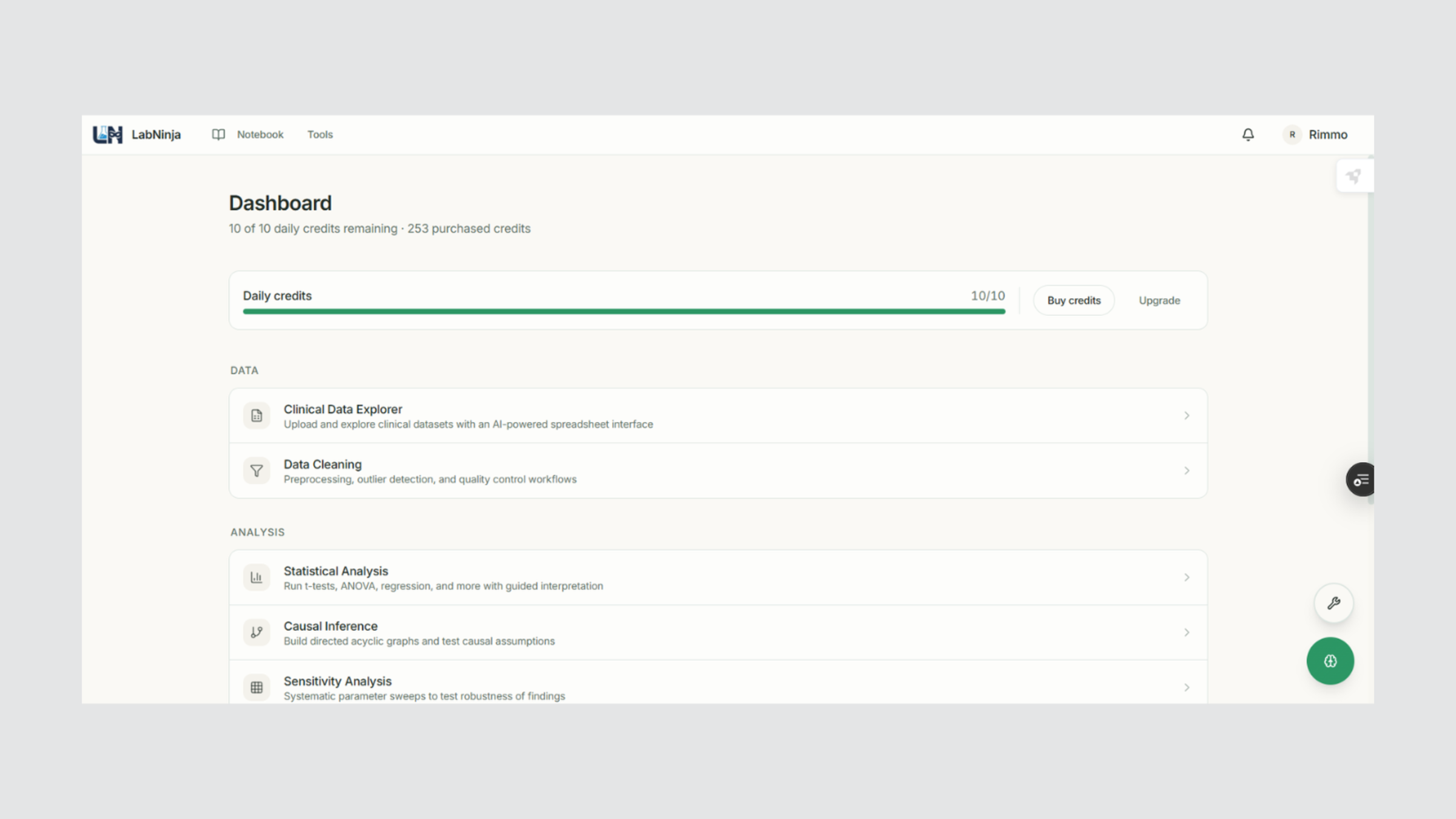
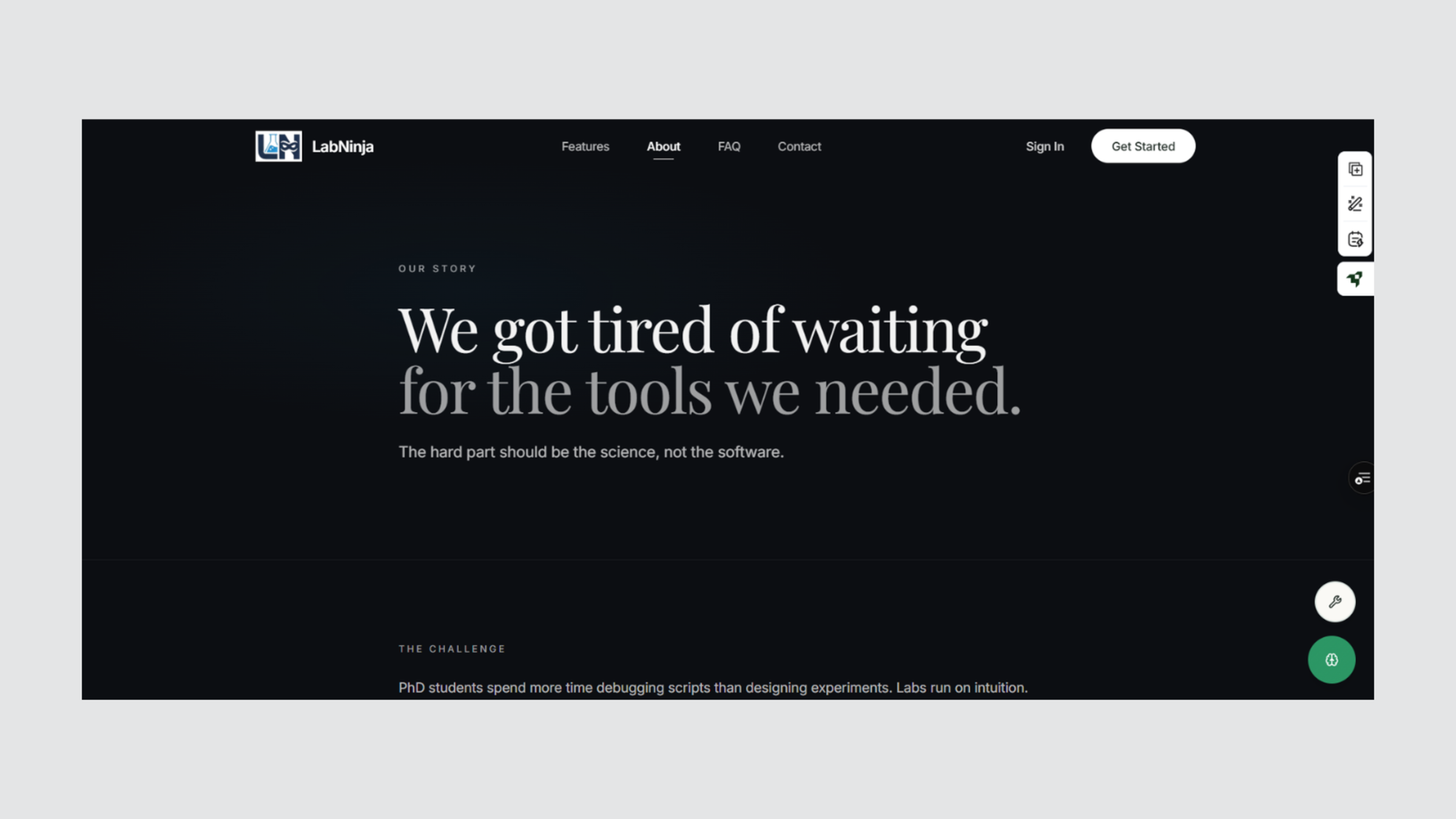
For his senior design project at Stevens, Lego built LabNinja, a lab intelligence platform designed to stop informal research knowledge from disappearing. He worked with LabNinja co-founder Christos Zervas '25, a Stevens master's student in computer science, and a friend from NYU whom he met at a local hackathon.
“LabNinja started with a shared problem: R&D was slow and painful, and we couldn't stop thinking about fixing it,” said Lego, whose motivation for the project comes from first-hand experience.
“Making sure you have enough reagents for a replicate so you don’t waste lab material — as a student, I’ve faced those decisions myself,” he said. Reagents are substances used in wet labs to trigger or measure chemical reactions.
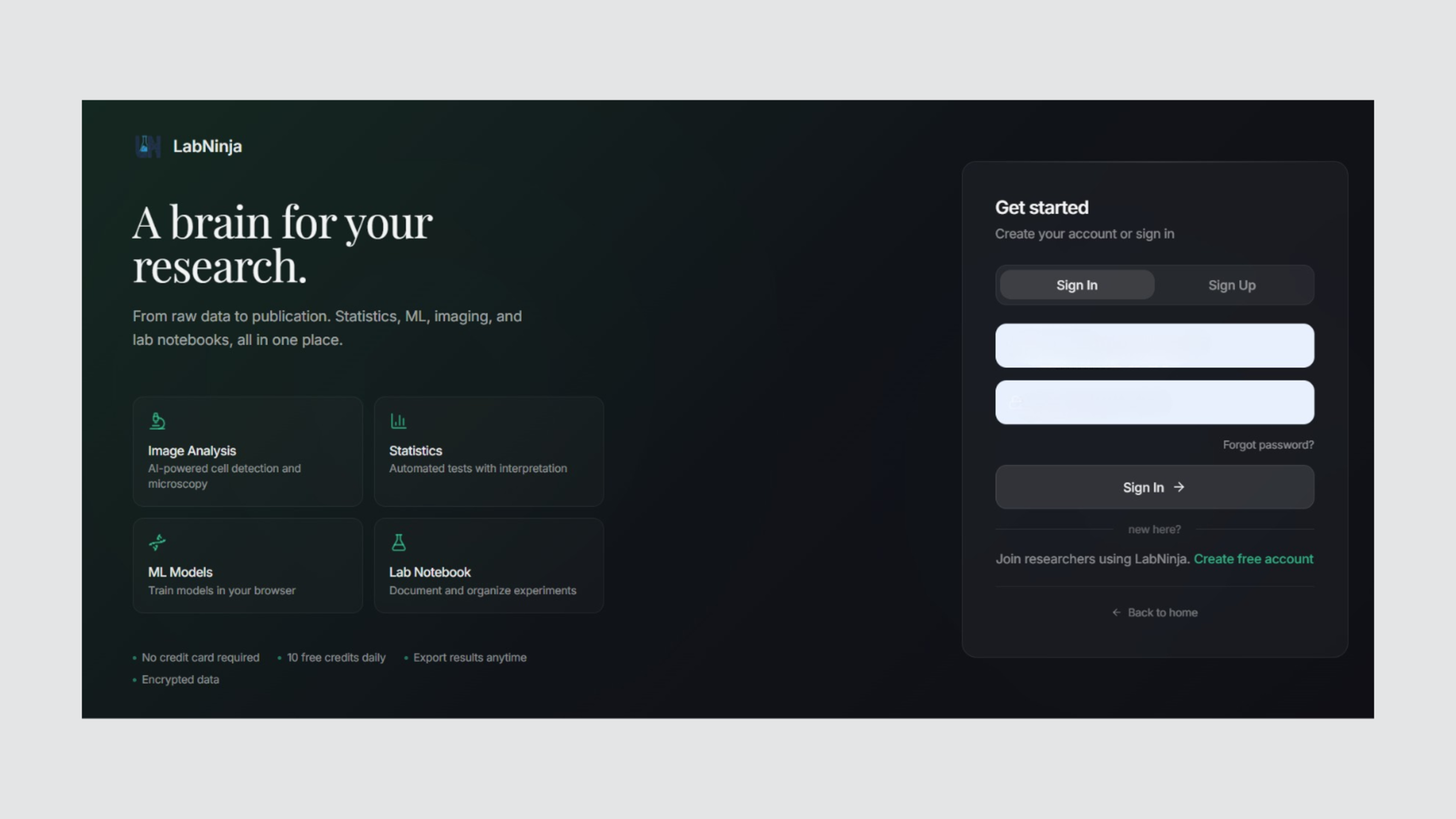
LabNinja takes in notebooks, images, instrument logs, and inventory and converts them into a searchable knowledge base that learns from a lab’s own history. The system generates ranked experiment recommendations, suggests appropriate controls and sample sizes, and produces step-by-step protocols with supporting evidence.
“We kind of built it initially to just solve our own problems and then explored taking it forward from there,” he added.
“One of the features of LabNinja is the lab notebook. It allows users to document lab activities in a user-friendly way,” explained Denver JnBaptiste, a lecturer in the Stevens Department of Chemistry and Chemical Biology, and Lego’s faculty advisor on the project.
Lego, who has continued to refine the platform as part of his senior project, notes that optical character recognition (OCR), a technology that allows text recognition from images, will be added as a feature in the future.
Lego will present LabNinja at the Stevens Innovation Expo on Friday, May 8, at Stevens’ campus in Hoboken, New Jersey.
A Launchpad
The path to LabNinja ran through two parallel experiences that eventually converged. The first came during his freshman year, in an introductory coding class taught by Mukund Iyengar, director of the Center for Entrepreneurship Education and teaching associate professor in the Department of Electrical and Computer Engineering, who also oversees Launchpad@Stevens, a student entrepreneurship program.
Iyengar gave students an option, and the one where Lego wouldn’t have to take a midterm sat well with him.
“The choice was to design an Android app from scratch, and if it worked, then I wouldn't have to take the midterm,” Lego said. “I remember pulling an all-nighter for two days, without any sleep. Thankfully, the Android app, which allowed a user to upload a song and transform it into a chipmunk voice — what we called “chipmunkfication” — worked. Dr. Iyengar liked it, so he gave us the opportunity to join Launchpad.”
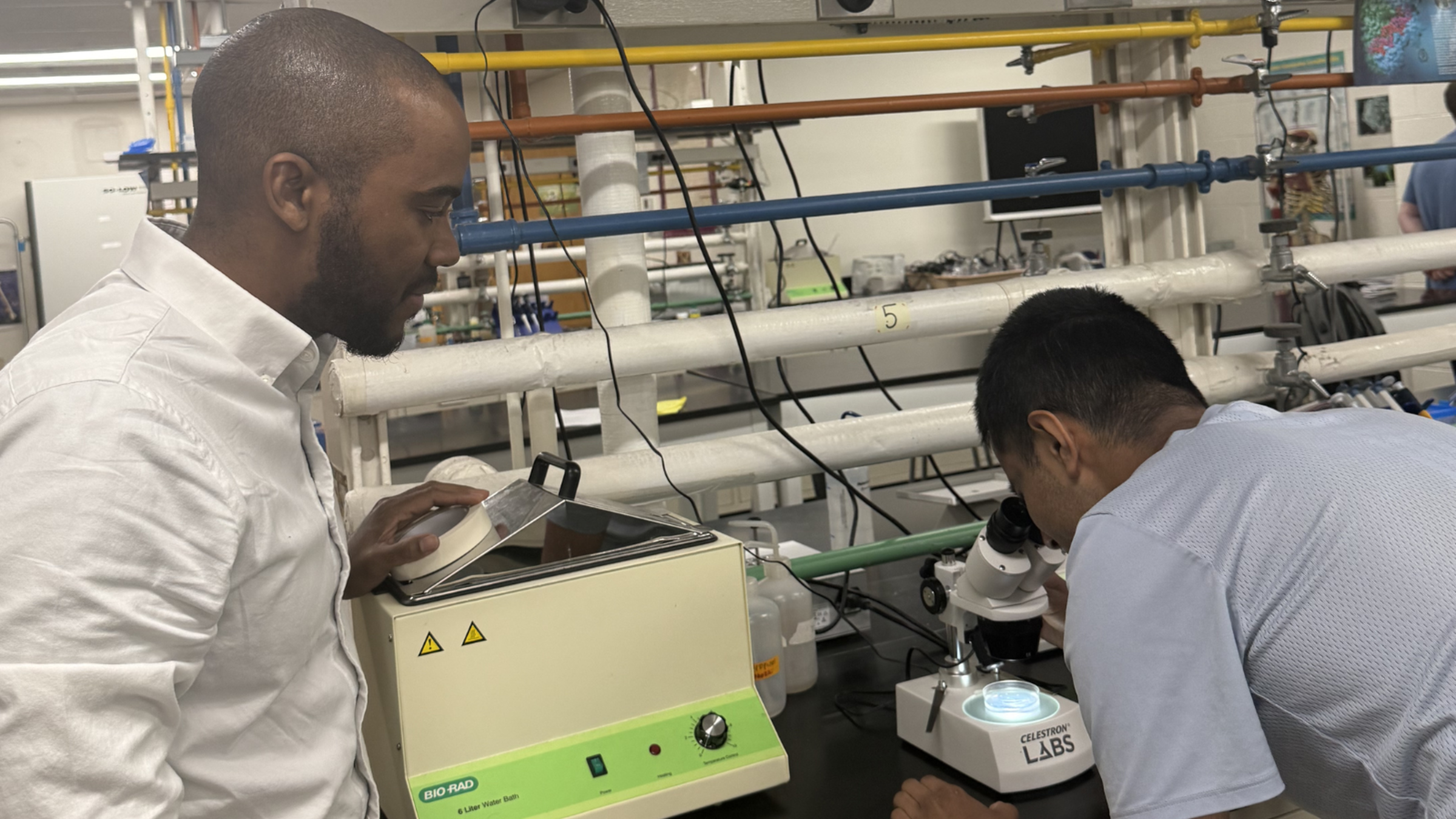
Then, in his sophomore year, Lego began doing wet lab work with JnBaptiste whose research focuses on RACK1-miRNA interactions, which can point toward new ways to understand or treat actin related cancer.
The wet lab work brought Lego into direct contact with some of the data problems he would later set out to address.
“I love research, but watching experiments fail on repeat, burning through reagents, and drowning in data just to get back to square one — it gets to you after a while,” said Lego. “Research should be driven by precision and human ingenuity, not brute force and wasted resources. That frustration is a significant reason why I am so passionate about our project.”
JnBaptiste saw early what Lego was after.
“He approached me with the goal of building something meaningful, something that could truly make a difference,” he said.
JnBaptiste spent days exploring ideas and discussing possibilities with Lego.
“During those conversations, I shared a simulation and prediction model I had developed using machine learning to analyze laboratory statistical data,” JnBaptiste said.
While the two had talked through the case for using machine learning, Lego came back with an extension to neural networks.
“He implemented it anyway. Weeks later, he returned with a working model that expanded on our ideas, incorporating neural networks and introducing several new approaches,” said JnBaptiste. “Then I saw it look a lot better, and when I saw how he changed it, I started focusing a lot more on neural networks.”
The collaboration helped reshape JnBaptiste’s own teaching. “As we work on LabNinja, I'm also learning how to teach better,” he said. “Not only with experimental lab focuses, but I’m also teaching machine learning.”
A model that aligns with existing lab processes
 At its core, LabNinja is designed to fit the way a lab already works, rather than requiring a lab to change its workflow to fit the platform.
That distinction matters, according to Lego.
“Each lab has its own requirements. You can’t just follow a set template for how research must be done, because every lab has different things, different approaches,” he explained. “For example, each lab produces its own data. What our model does is basically live within a lab’s own system, so it can learn from their past mistakes and the results they got, and eventually map that into future work. It builds those bridges, so they know precisely what to test for and what to look for.”
For postdocs and other researchers, the tool can help expedite the research process. JnBaptiste puts it this way: “I think AI should always be an aid to what we can do, to enable us to do a lot more, a lot faster, a lot better.”
Building for the long term
“I was thinking of going to a liberal arts school, but at the eleventh hour decided to do engineering, so Stevens was the natural choice. I came here, and over the years, I found a really wonderful community here — friends, professors, mentors,” Lego said. “The Stevens community helped me grow.”
He’s seen LabNinja grow, too. Traction has extended it beyond the academic research teams the project originally had in mind. Sign-ups have come in from social scientists, medical students, and clinicians working through meta-analyses and clinical trial data.
Launchpad@Stevens has been an ongoing resource.
“Literally everyone here is heads-down trying to build something ambitious,” Iyengar said, adding that he takes a long-term view with student founders. “We keep our channels open for them long after they graduate — a quick call, mentorship, VC introductions, anything in between.”
“There are other students who started a company from Stevens,” Lego said. “Some of them graduated; some of them are building together. We are helping each other — sharing information.”
After graduation, Lego, who is considering graduate school, in part because he sees LabNinja as a research problem that would benefit from an academic environment, is determined to continue working on the project, noting, "All of us intend to make LabNinja happen.”
Iyengar agrees. “We look forward to supporting LabNinja in that capacity for as long as necessary.”
Learn more about academic programs and research in the Department of Biomedical Engineering: