Stevens Environmental Engineering Researchers are Using Plants to Mine Nickel
As the world continues to move toward electric vehicles (EVs) and renewable energy, the materials for this new infrastructure are in high demand. For example, nickel is a key ingredient in lithium-ion batteries, which power EVs and many other clean energy technologies.
However, extracting nickel from its natural underground home is difficult, and the U.S. has only one active nickel mine—the Eagle Mine in Michigan. That means American manufacturers must rely on foreign sources, which can be costly both to budgets and the environment.
Stevens Institute of Technology Department of Civil, Environmental and Ocean Engineering professors Dibs Sarkar and Christos Christodoulatos are addressing this challenge by turning over a new leaf in the process of obtaining nickel. Along with researchers from Michigan Technological University and the New Jersey Institute of Technology, they are working on a groundbreaking sustainable alternative: phytomining, which uses plants to extract metals from soil.
Growing a greener solution for nickel extraction
The idea is that certain plants, called hyperaccumulators, can draw nickel into their leaves and stems. Once the nickel has been extracted from the harvested plant, it can be used for industrial purposes. The project is funded through a $1.9 million grant from the U.S. Department of Energy’s Advanced Research Projects Agency (ARPA-E).
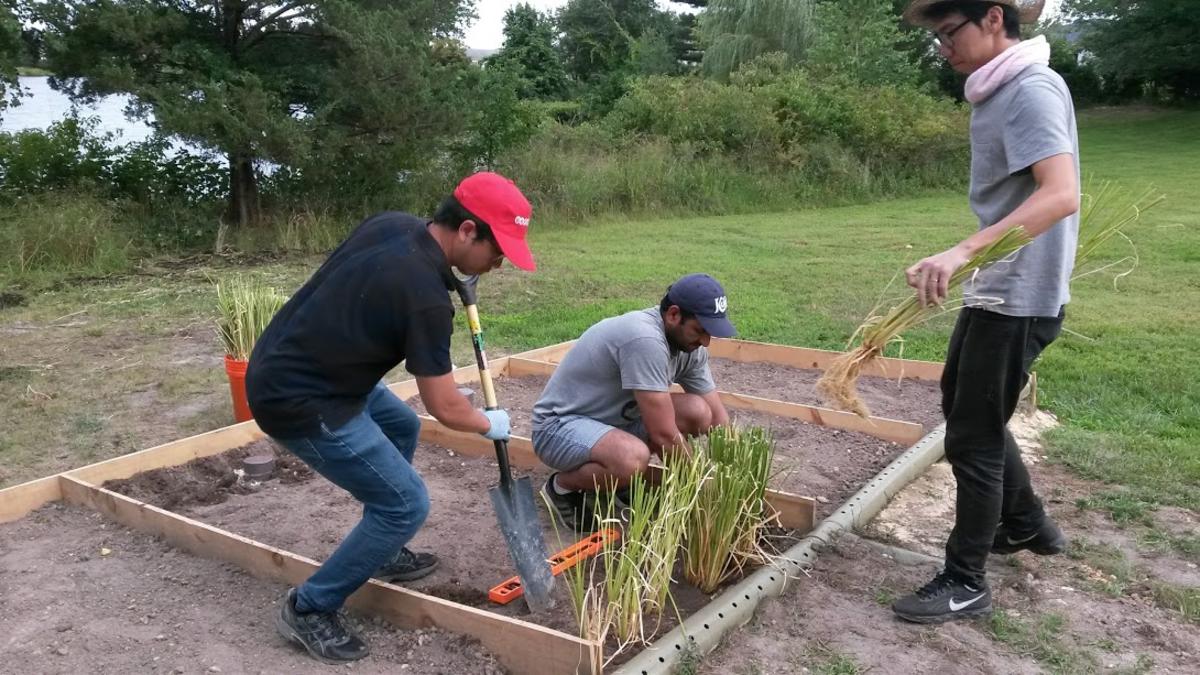
To test this concept, the team is using outdoor planter boxes at Stevens to test spoils from ultramafic mine tailings and soils from Serpentine Barrens. These rare patches of land, primarily along the U.S. coastal lines, have high metal content and low nutrient levels, making them unsuitable for farming. With advanced phytomining technology, they are working to turn the currently unproductive spoils and soils into valuable nickel sources.
"We’re looking at how hyperaccumulator plants absorb and store nickel to understand the process better," Sarkar said. "We’ve been doing greenhouse studies of soil samples to find the combination of chemical and microbiological systems that works best to extract nickel from the soil and support plant growth. We’re using natural compounds such as citric acid to make the nickel more soluble in the soil, and introducing bacteria that release organic acids to help break down minerals that contain nickel so it’s easier for plants to absorb."
Using a biosensor, the research team will measure nickel levels in plants in real time. Their analysis of the economic and environmental benefits will help inform whether to proceed to large-scale field studies to explore the viability of commercializing phytomining.
The future of nickel mining could be rooted in nature
This project showcases how innovation can bridge the gap between the promise of clean energy and the environmental pitfalls of sourcing materials.
"EV batteries need certain materials that are not easily available, and that can themselves be destructive to the environment in areas such as deforestation, soil erosion and water pollution," Sarkar said. "Phytomining offers a cleaner, more sustainable alternative by using plants to extract nickel from land that would otherwise be useless. Even better, through a process called phytoremediation, it can help clean up contaminated mine spoils while recovering these valuable metals. We’re excited at the potential of this research to pave the way for a greener, more sustainable future in mining and clean energy technology."
Learn more about academic programs and research in the Department of Civil, Environmental and Ocean Engineering: