Stevens Undergraduate Emily Lossman Awarded the Distinguished Goldwater Scholarship
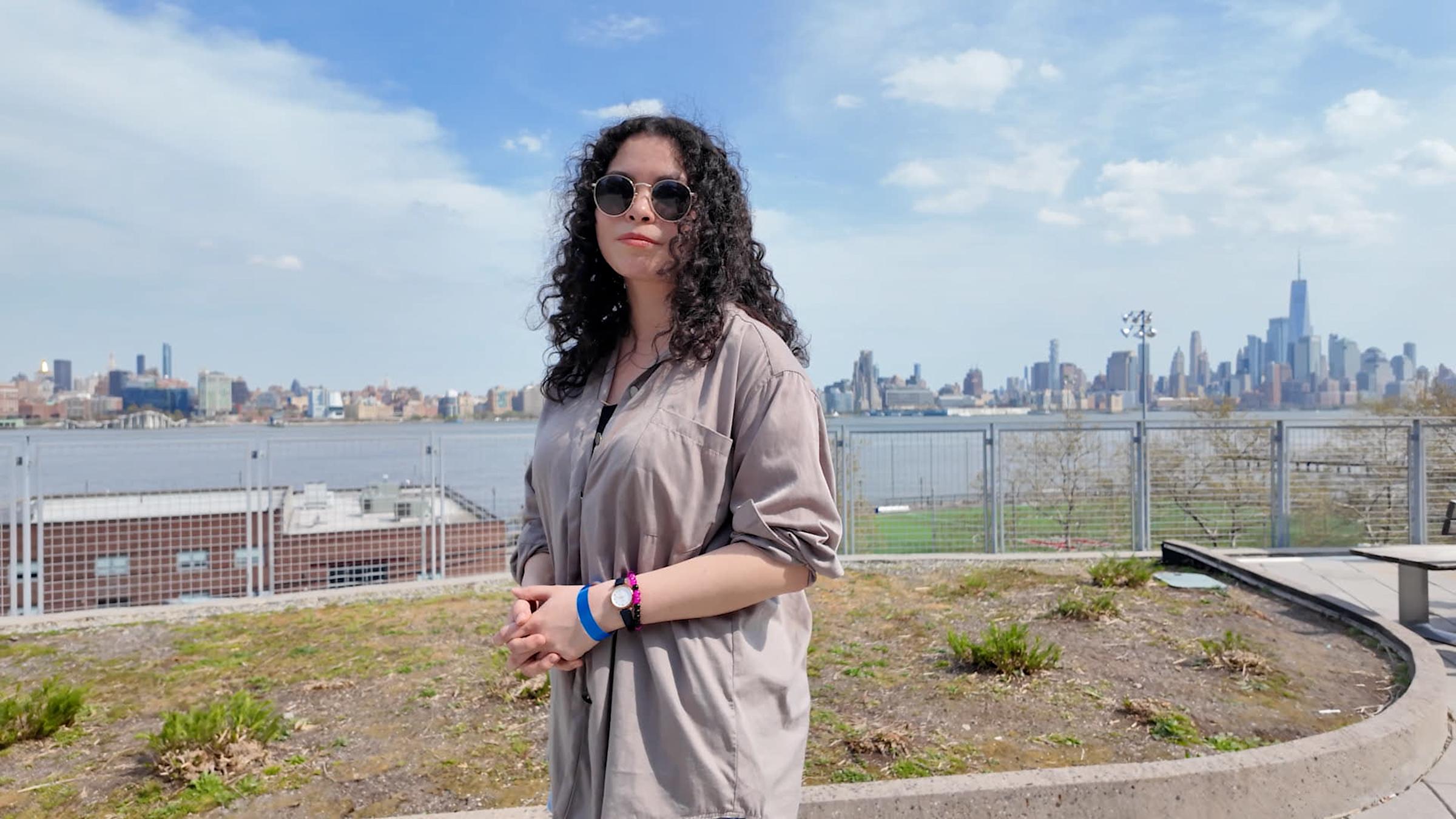
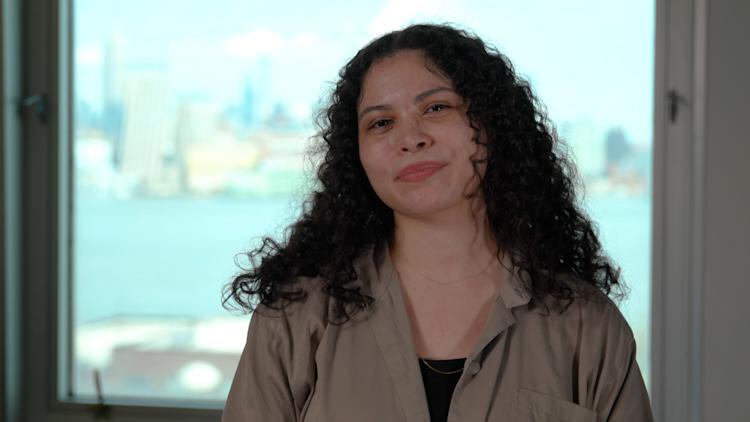
Emily Lossman ’28 comes from a long line of ship captains and engineers, and she grew up watching boats along the Hudson River. She had never considered naval engineering as a career, though, until she saw it as an option while applying to Stevens Institute of Technology.
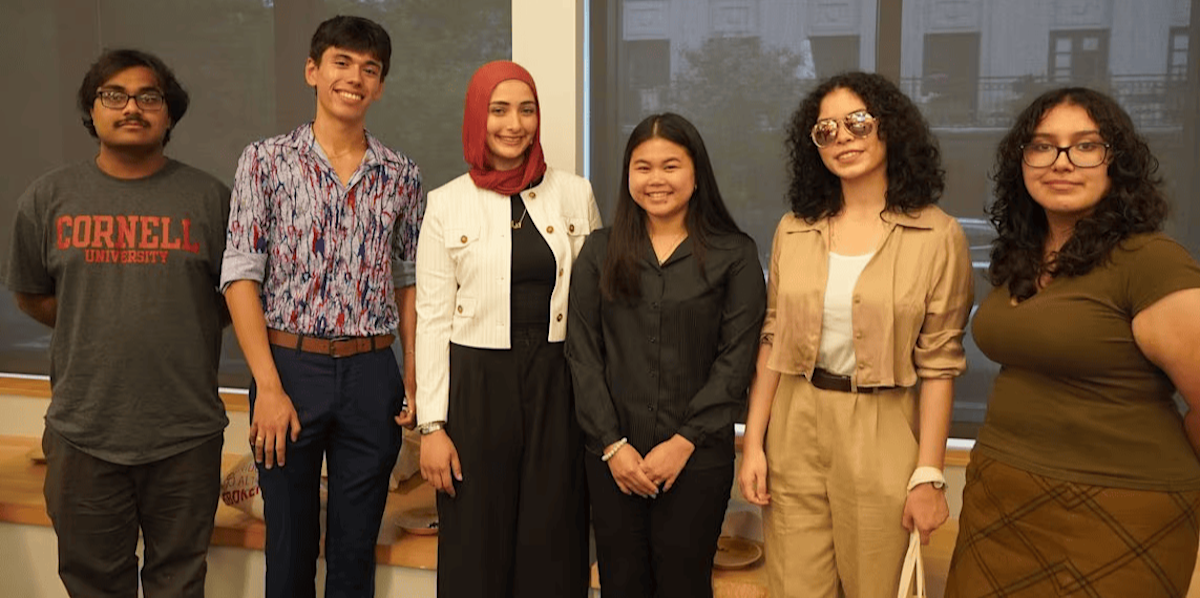
Her “no-brainer” decision to follow that path has led to a wave of success, most recently with national recognition when she was selected from a pool of nearly 1,500 applicants as a 2026 Goldwater Scholar. One of the nation’s most prestigious scholarships for students pursuing research careers in the natural sciences, engineering and mathematics, the Goldwater Scholarship provides up to $7,500 annually for educational expenses. It is the fourth Goldwater scholarship awarded to a Stevens undergraduate in the past few years.
“The Goldwater Scholarship recognizes students who have the curiosity, discipline and vision to become the next generation of research leaders,” said Dr. Chandra S. Pemmasani, founder and CEO of UWorld, a partner to the Goldwater Scholarship initiative. “UWorld is proud to support these scholars as they pursue discoveries that will advance science, strengthen healthcare and benefit society.”
Engineering a sea change
As a research assistant with Jia Mi, assistant professor in the Department of Civil, Environmental Ocean Engineering, Lossman spent her first year at Stevens working on a marine-energy-powered project, supported by the Provost Undergraduate Research Scholarship, to farm aquatic animals and plants.
“I knew of solar panels, wind farms and sustainable energy, but I had never heard of marine energy,” she said. “It was eye-opening to see how many applications there can be to naval and ocean engineering.”
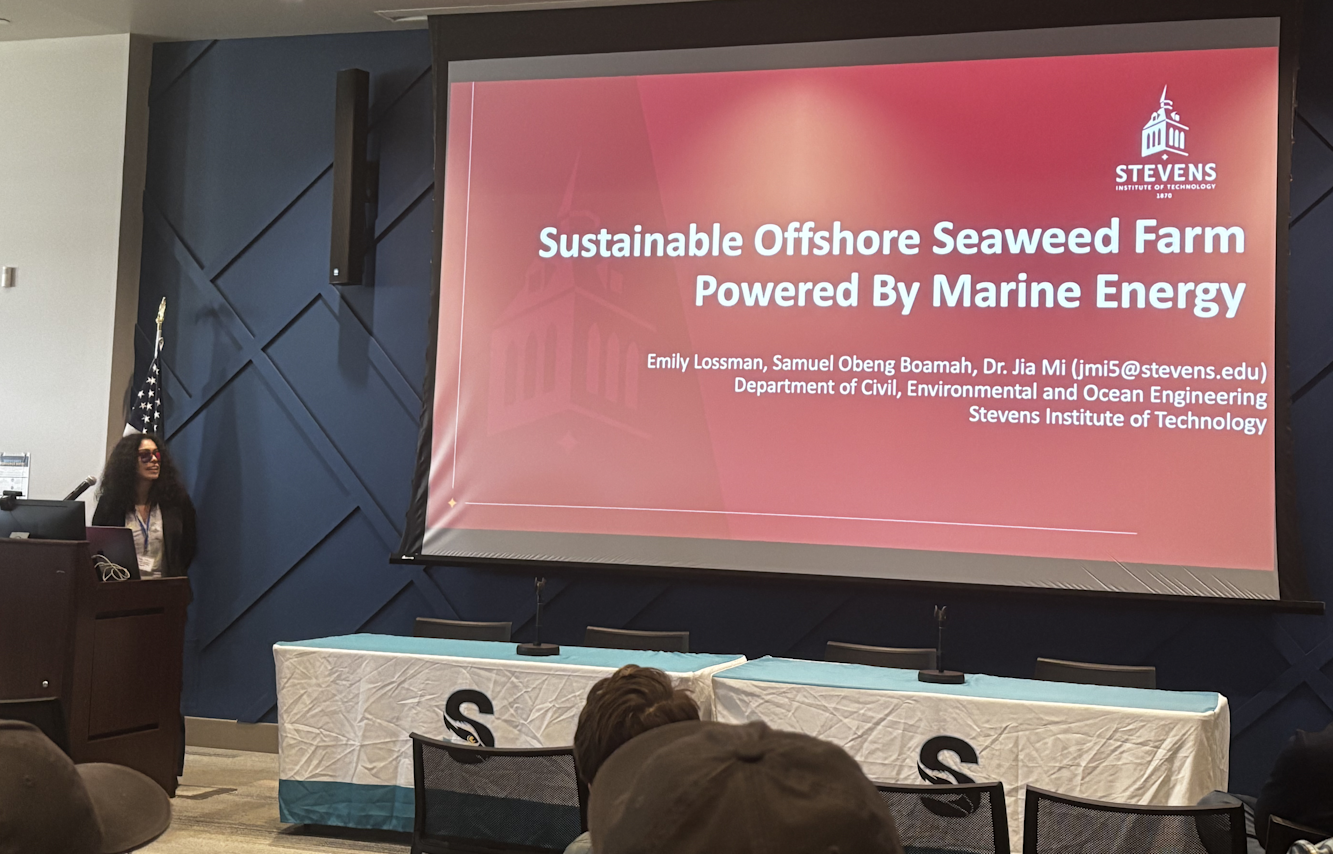
Lossman was then selected for the 2025 PSEG Undergraduate Research Scholars for Environmental Justice summer fellowship, funded by the PSEG Foundation and coordinated by Stevens Center for Sustainability (SCS). With Mi’s continued mentorship and training, she developed AquaEmpower, a wave-powered seaweed farm designed to dramatically expand sustainable biomass production and create jobs.
“The goal was to contribute to sustainability using marine energy,” she explained. “Seaweed can be processed for use in everything from food to pharmaceuticals to cosmetics, or sunk to reduce atmospheric carbon dioxide. The farming is done in often underprivileged coastal communities and provides seasonal jobs to stimulate local economies.”
She quickly impressed Mi with her strong foundational knowledge, her ability to think deeply and critically about complex problems, her proactive approach to research and her excellent leadership and management skills.
“Emily is an outstanding undergraduate researcher,” Mi said. “Last summer, while preparing an experimental demonstration in a small wave tank, we encountered technical challenges with the 3D printer. Emily sought out resources, learned from online materials and iterated repeatedly until she developed a creative and effective solution with potential for future projects. I am very proud of her accomplishments.”
Taking a deeper dive
Building on the groundwork of that design, Emily then captained the expanded AquaEmpower team that won the $20,000 grand prize in the 2026 Marine Energy Collegiate Competition (MECC), hosted by the U.S. Department of Energy.
“My MECC team, comprising 10 students from five departments, has been impressive in turning my design into something much more,” she said, citing improvements in feasibility, longevity, cost-effectiveness and business planning. In addition, the team is partnering with Stevens clubs Habitat for Humanity and Service, Activism, Volunteering, and Engineering (SAVE) to bring awareness to sustainable development and renewable energy.
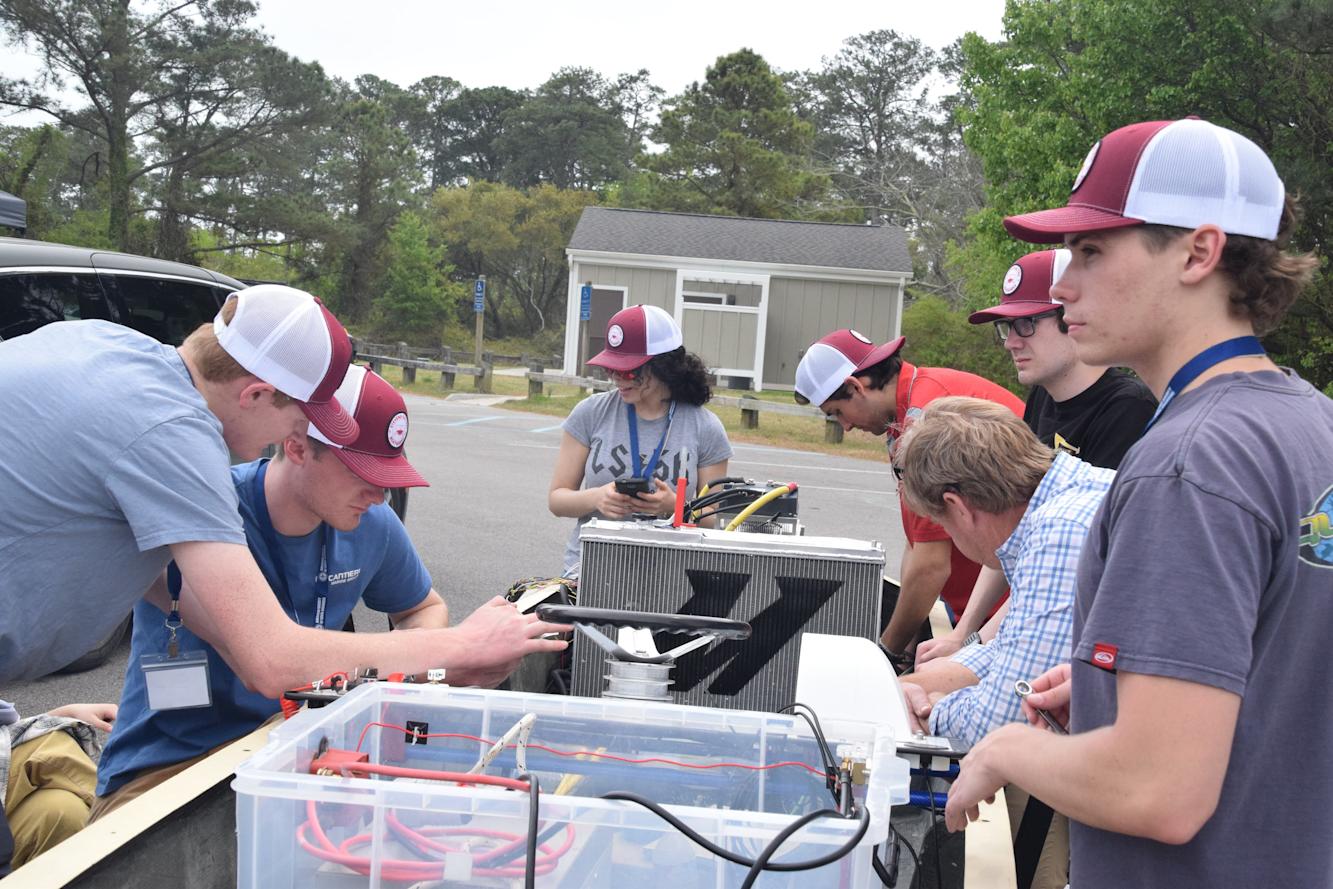
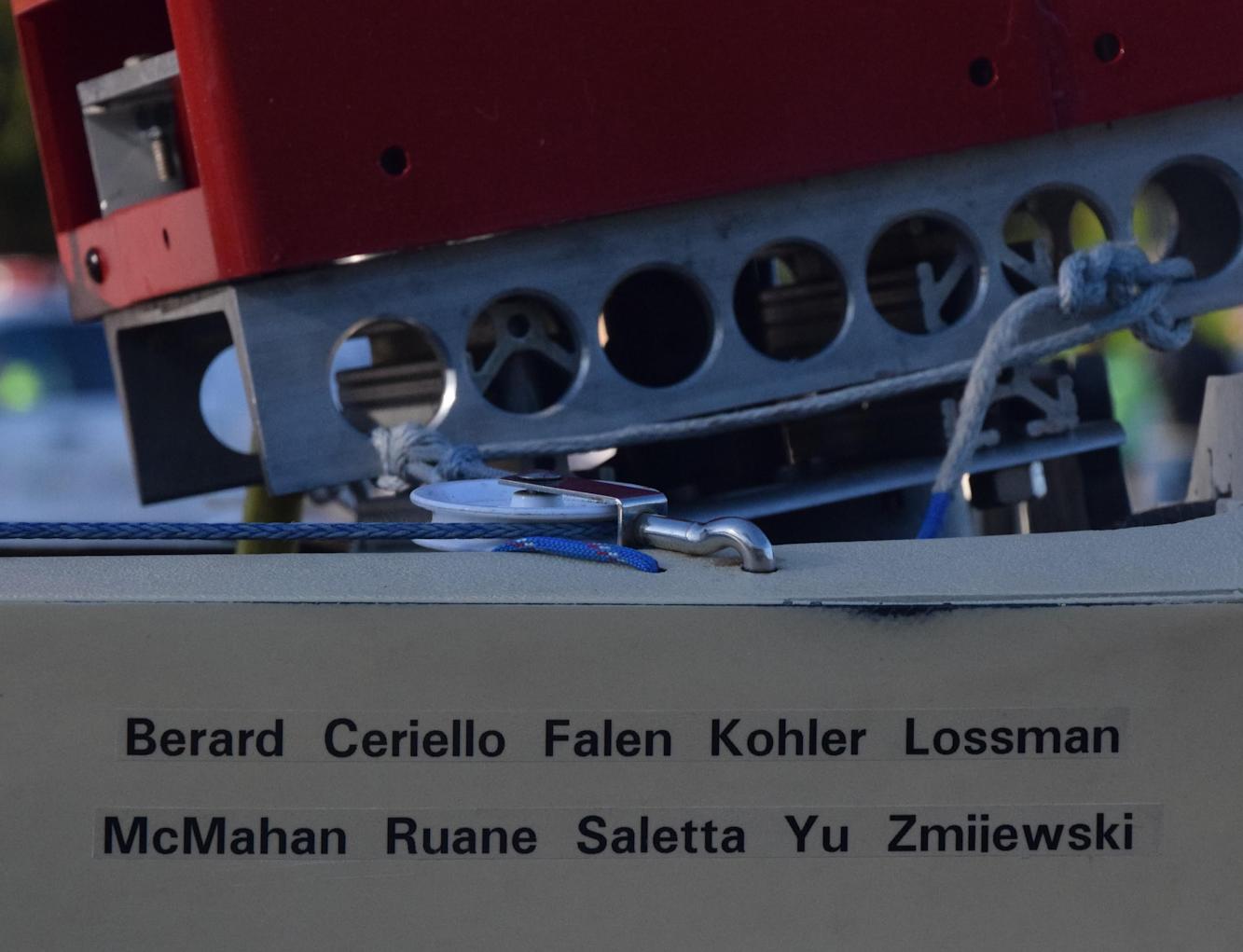
In addition, she is a founding member of the Stevens Electric Boatworks team, which won the 2025 American Society of Naval Engineers’ Promoting Electric Propulsion competition with faculty advisor Michael DeLorme. Lossman now manages the team’s research and development subgroup.
Lossman is also committed to designing accessible solutions, a personal mission further shaped by her interest in biomedical engineering and her belief that inclusive design creates more opportunities.
“The potential of people who need accommodations is often overlooked,” she explained, “but we offer insights from a unique perspective and new ideas. Every design I complete will be as accessible as I can make it, so others have the opportunity to achieve something meaningful and make a positive contribution to the world.”
Navigating an ocean of marine energy opportunities
Lossman credits Stevens for helping turn her ambitions into reality.
“Because I seized the great opportunities for research and faculty support at Stevens,” she said, “I have been able to make all the naval and ocean engineering projects I have been interested in a reality.”
She plans to pursue both a master’s degree and Ph.D. in ocean engineering, with goals of designing ocean systems powered by marine energy and teaching as a professor of engineering.
“Marine energy has all the sustainable upsides of wind and solar power without taking up critical space on land,” she says. “I want to be part of solving whatever problems emerged in this field. Being named a Goldwater Scholar opens doors for me that I did not even realize were there. It makes my graduate education and career goals much more realistic ideas, much sooner than I expected.”
Learn more about academic programs and research in the Department of Civil, Environmental and Ocean Engineering: